Five appliances that can use a lot of electricity at home
The immersion has been taking the blame in Irish homes for long enough!
But it’s not the only appliance with a healthy appetite for electricity. Anything that heats water, air or food can clock up the kilowatts.
Here are five worth keeping an eye on, what they could cost to run and a few handy ways to keep them in check.
1. Electric showers
Electric showers need plenty of power, but usually for a relatively short time. Unlike showers that use hot water from a boiler or immersion, an electric shower heats the water as you use it.
Most electric showers operate between 8.5kW and 10.5kW, which means they use a significant amount of electricity in a short space of time.
What could that cost?
At an electricity unit rate of 45.38 cent per kWh using a 9kW electric shower, here’s an illustrative example*:
- 10-minute shower: about 68 cent
- eight-minute shower: about 54 cent
- Need a hair wash? Shaving your legs? A 25-minute shower will cost about €1.70.
Actual electricity use will depend on the shower and how you use it.
*We’ve shared a quick tip on how to calculate the cost of electricity usage at the end of this post.
Know Your Power tip
Two minutes can make a difference. Cutting a 10-minute shower to eight minutes would reduce the electricity used by the shower by about 20%, assuming it runs at the same power throughout.
2. The immersion
The immersion deserves its reputation for being one to watch.
An immersion uses an electric heating element to heat water in your hot water tank. For example, a 3 kW immersion running continuously at full power for two hours would use 6 kWh of electricity.
What could that cost?
As an illustrative example*, at 45.38 cent per kWh, 6 kWh would cost about €2.72.
If you did that every day for a year, the electricity cost would be about €994. That’s an illustration rather than a typical annual cost, (and not accounting for that time you went on holiday and forgot to turn off the immersion…) as actual use will depend on your immersion, thermostat, hot water needs and how long the heating element is operating.
Know Your Power tip
A timer can help you heat water when you need it rather than leaving your immersion switched on unnecessarily. Insulating your hot water tank can also help it retain heat.
3. Tumble dryers
On a wet Irish day, the tumble dryer can be hard to resist.
How much electricity a dryer uses varies considerably by its type, energy efficiency, programme and load.
Here’s an example for illustrative purposes*
If a drying cycle uses 3 kWh, at 45.38 cent per kWh it would cost about €1.36.
Four loads like that each week would cost around €5.45 a week, or about €283 over a year.
Know Your Power tip
Air-dry clothes when it works for you. If you’re buying a new tumble dryer, check its energy label and estimated energy consumption so you can compare models before choosing one.
4. Electric ovens
An oven can use a fair bit of electricity, but it won’t be running at full power for the whole cooking time. Once it reaches temperature, the heating element will usually switch on and off to maintain the heat.
Here’s an example for illustrative purposes*
If an oven consumed 2.5 kWh over one hour, that would cost about €1.13 at 45.38 cent per kWh.
Your actual cost will depend on the oven, temperature, programme and cooking time.
Know Your Power tip
Cooking more than one dish while the oven is hot can help you make better use of the energy you’re already using. And try not to keep opening the door to check dinner. Every peek lets some heat escape.
5. Portable electric heaters
Portable electric heaters can warm a room quickly, but their electricity use can add up when they’re running for long periods.
For example, a 2 kW heater running continuously at full power would use 2 kWh in one hour.
What could that cost?
As an illustrative example*:
- one hour at full power, at 45.38 cent per kWh: about 91 cent
- five hours at full power, at 45.38 cent per kWh: about €4.54
In practice, some thermostatically controlled heaters won’t draw their full rated power continuously.
Know Your Power tip
Focus the heat where you need it. Keep doors closed between heated and unheated rooms and tackle draughts around windows and doors where you can.
Want to know what an appliance costs you?
Start with three things:
- its power rating in kilowatts (kW)
- how long it’s using that power
- your electricity unit rate
A simple estimate is:
Power in kW × hours used × electricity unit rate per kWh = estimated electricity cost
So, using the illustrative rate* in this article, a 2 kW appliance running continuously at full power for one hour would cost about 91 cent in electricity.
The important bit? Your appliances, your habits and your electricity plan all matter. Getting to know them can help you spot where small changes could make a difference.
Know Your Power.
*All costs in this article are illustrative estimates based on Bord Gáis Energy’s standard electricity unit rate of 45.38 cent per kWh (inc VAT) and does not include any annual standing charges or other charges that apply such as PSO. They cover electricity unit consumption only. Actual costs will vary depending on your electricity plan, appliance model and efficiency, power or heat setting, thermostat operation and how long you use the appliance. Check your appliance information and your own electricity plan for figures relevant to your home.
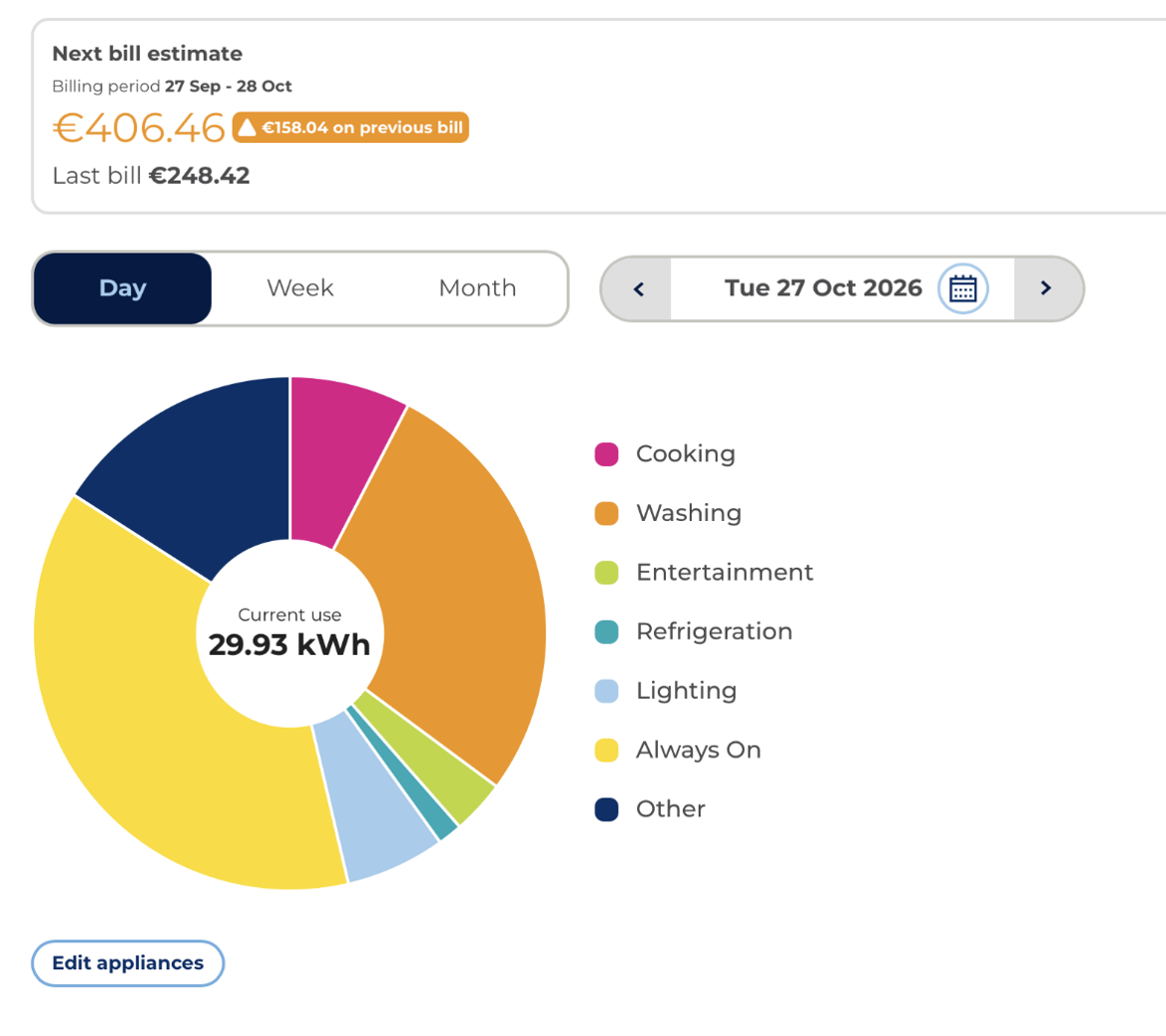
At Bord Gáis Energy, Know Your Power means helping you understand your home, your energy and your options. If you’re a Bord Gáis Energy smart electricity customer, you can use your energy insights to see exactly how you’re using energy.
Browse our plans today.
Book your boiler service now

Beat the boiler service booking rush of the cooler months.
Book your servicePeople also read
Is solar worth it in Ireland?

We look at solar powered homes in Ireland and show that solar is indeed worth it in Ireland in 2026.
Read now