Are EV electricity tariffs worth it in Ireland?
By Valerie Hand - Published 15 May 2026 | Updated 22 June 2026
The shift to electric vehicles in Ireland feels like a natural next step. More environmentally friendly, quieter driving and the promise of lower running costs all make a compelling case.
But new research commissioned by Bord Gáis Energy shows that while interest in EVs is growing rapidly, understanding is still catching up.
Nearly two-thirds (63%) of Irish adults say they are already driving, considering, or open to owning an electric vehicle (EV) or plug-in hybrid (PHEV).
However, while 67% believe switching to an EV electricity tariff could reduce their costs, only 37% say they actually understand how those tariffs work in practice.
This gap between interest and understanding is where many drivers either unlock real savings, or miss out entirely.
And that’s where EV tariffs come in.
In this article:
- What is an EV electricity tariff?
- How EV tariff savings actually work
- The trade-offs to consider with EV tariffs
- When EV electricity tariffs are worth it
- When EV tariffs may not deliver savings
- What many get wrong about EV tariffs
- Comparing EV electricity tariff options
- How to maximise savings on an EV tariff
- The future of EV electricity tariffs in Ireland
- Know your power: Key EV tariff takeaway
What is an EV electricity tariff?
At its core, an EV tariff is a type of time-of-use electricity plan. Instead of paying the same rate all day, your electricity price changes depending on when you use it.
The defining feature is a low-cost overnight window, often referred to as a “Night Boost” period. With Bord Gáis Energy’s EV plan, for example, electricity can drop to around 7.45c per kWh between 2am and 5am, compared to typical daytime rates of 25c to 40c per kWh.
This pricing is made possible by smart meters, which track when electricity is used, not just how much. Without a smart meter, these tariffs simply do not work.
So the idea is simple: shift your EV charging into that cheaper overnight window and your cost per kilometre drops significantly.
How the savings actually work
Charging an electric vehicle uses a meaningful amount of electricity. A typical EV battery might require 40 to 70 kWh for a full charge, and an average driver in Ireland could use around 150 to 200 kWh per month just for driving.
If you are paying:
- Around 35c per kWh during peak times
- Around 7c to 10c per kWh overnight on an EV tariff
The difference is substantial.
Over a month, that can mean savings of €30 to €50 just on charging. Over a year, that becomes hundreds. Compared to petrol or diesel costs, the gap widens further.
However, research shows that while most consumers believe savings are possible, not everyone is confident in how they work or how much they might save.
And that’s important because these savings only materialise if you consistently charge at the right time.
The trade-offs you need to consider
This is the part that is often overlooked.
EV tariffs are not simply cheaper plans. They are structured differently and that structure comes with trade-offs:
- Higher standing charges - Sometimes, these tariffs may have higher standing charges.
- Higher peak rates (5pm - 7pm) - This may make evening electricity usage more expensive.
- Moderate day rates - Typically sitting between standard smart tariffs and flat-rate plans.
So while your EV charging might be very cheap, the rest of your electricity use may not be.
Research suggests that uncertainty is the biggest barrier for consumers here. Around 23% say they are unsure whether an EV tariff would actually save them money, while others cite complexity or lack of understanding. It's a new concept for car owners in Ireland so this makes a lot of sense.
This is why the “best” plan with the highest discount is always tied to behaviour.
When EV tariffs are worth it
There is a clear profile where EV tariffs deliver strong value for those who avail of them.
They most benefit the following user profiles:
You charge at home regularly
If most of your charging happens at home, you can take advantage of the cheapest rates.
You can reliably charge overnight
If your car or charger allows scheduled charging between 2am and 5am, you are maximising the tariff.
You drive a reasonable distance each year
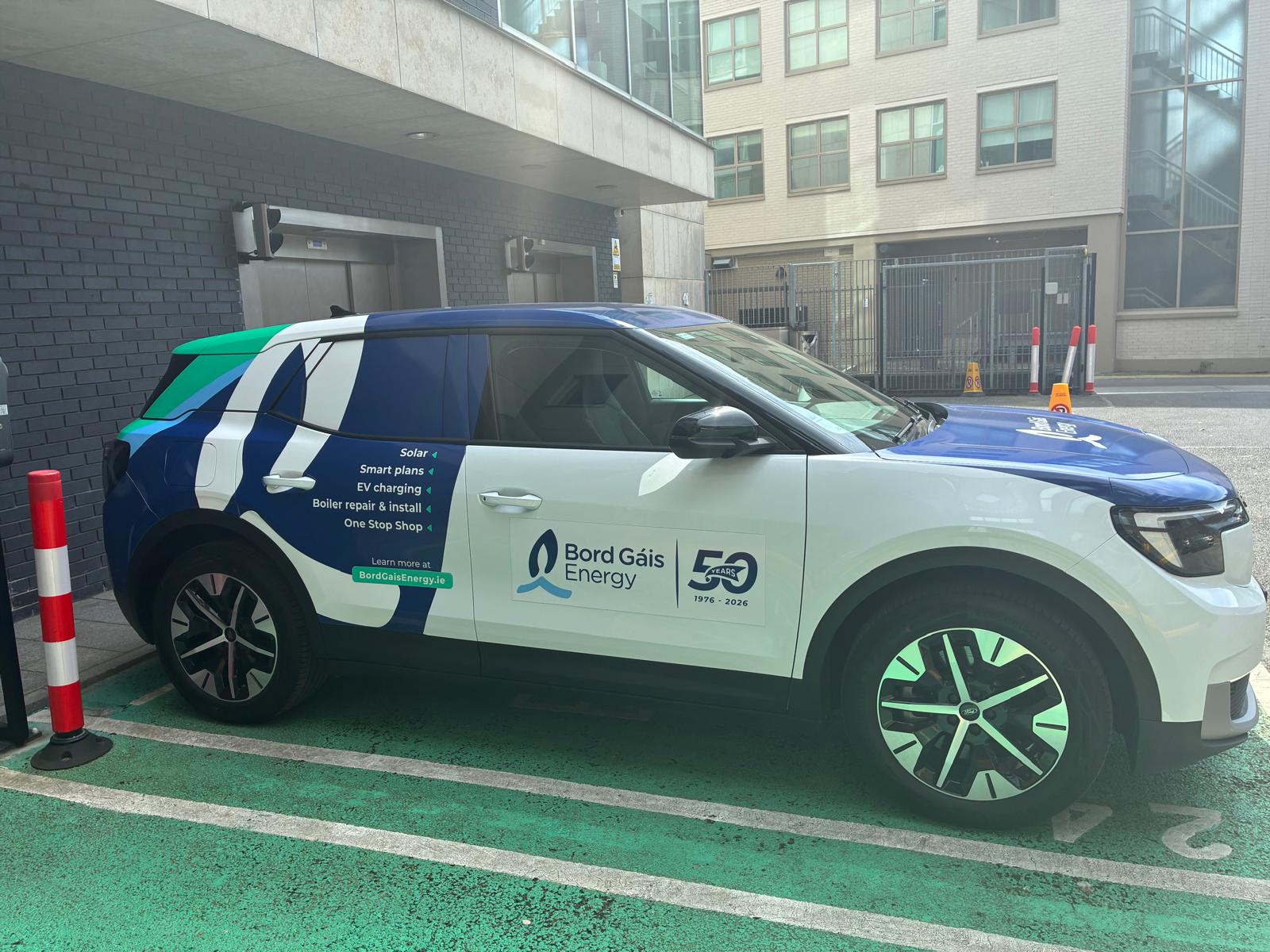
The more you drive, the more you charge and the more you benefit from lower rates. Myself and the Bord Gáis Energy field team has been driving long-range EVs and we love them. They look great but also, and more importantly, they have fantastic long range capabilities.
You are mindful of peak-time usage
If you can reduce electricity use during 5pm to 7pm, you avoid the most expensive rates.
In this scenario, the savings are not just theoretical. They are very real.
When EV tariffs may not deliver
There are also clear situations where EV tariffs can underperform or even cost more.
You cannot stick to overnight charging
If you regularly charge during the day or evening, you lose the main benefit.
Your household uses a lot of electricity in peak hours
Cooking, heating, showers and general evening usage can become more expensive under an EV tariff.
You rely on public charging
Public chargers in Ireland can cost 54c to 66c per kWh, which is far higher than home charging. If you are not charging at home, an EV tariff offers little value.
You drive very little
If your annual mileage is low, your EV charging costs are already minimal. In this case, the higher standing charge may outweigh any savings.
Your home energy use is high outside EV charging
If most of your electricity use is unrelated to your car and happens during the day or peak times, other tariffs may suit you better.
Even among EV and PHEV owners, there is evidence that not everyone is fully optimising their setup. While many have researched EV tariffs, fewer have actually switched to a time-of-use plan.
This suggests that awareness alone isn’t enough understanding and behaviour are what drive real savings.
What many get wrong about EV tariffs
One of the most important insights from recent research is this:
Understanding EV tariffs is the single biggest factor influencing whether people believe they will save money.
Among those who say they understand tariffs well, a large majority believe tariffs will deliver savings. That confidence drops significantly among those with low or no understanding.
In practical terms, that means:
- The biggest barrier isn’t cost - it’s confidence
- The decision isn’t just financial - it’s behavioural
- Education plays a key role in unlocking value
As EV adoption grows, the difference between “considering” and “benefiting” from EV ownership increasingly comes down to how well people understand charging and tariffs.
Comparing your options
Bord Gáis Energy outlines four main types of plans, each with a different use case:
Smart EV tariff
Best for EV owners who can charge overnight. Highest potential savings, but only if used correctly.
Standard smart tariff
Offers lower peak and day rates with decent night rates. A strong all-round option if your usage is flexible but not EV-focused.
Smart All Day plan
A flat rate regardless of time. Simpler and more predictable, ideal if you do not want to think about when you use electricity.
Smart Weekend Plan
Our Weekend smart plan charges you a night rate all weekend, with day, night and peak pricing on weekdays so you can shift usage to cheaper times.
Each plan solves a different problem. The key is choosing the one that fits how your home actually runs.
How to maximise savings on an EV tariff
If you are considering switching, a few practical steps make a big difference:
Start by understanding your electricity usage. Look at when you use energy, not just how much.
Compare full tariff details, not just the headline EV rate. Standing charges and peak rates matter.
Use smart charging features. Most EVs and chargers allow you to schedule charging automatically.
If you have solar panels or a home battery, think about how they integrate with your EV charging habits.
And most importantly, review your plan regularly. Energy pricing is changing and what works now may not be the best option in a year.
The bigger picture: where EV tariffs are heading
As Ireland continues to increase its use of renewable energy, EV tariffs are likely to evolve further.
Research suggests the conversation is already shifting from “Should I buy an EV?” to “Can I confidently manage one?”, including charging, tariffs and energy use.
This means EV owners will play an increasingly active role in how the electricity system operates, not just how much they pay.
Final verdict on the value of EV tariffs
So, are EV electricity tariffs worth it in Ireland?
For many drivers, yes. Especially those who charge at home, drive regularly and can stick to overnight charging habits.
But they are not automatically the cheapest option.
The real value comes from alignment. If your lifestyle fits the structure of the tariff, the savings can be significant. If it does not, a standard smart tariff or flat-rate plan may actually leave you better off.
The difference is not in the plan itself. It’s in how you use it.
Find a plan that suits your needs with Bord Gáis Energy.
The insights referenced in this article are based on research conducted by iReach Insights for Bord Gáis Energy. The study was carried out as part of a nationally representative omnibus survey of 1,000 adults across Ireland, covering a range of age groups, regions and socio-economic backgrounds. Fieldwork was conducted between 21st and 28th May 2026 using iReach’s Consumer Decisions Panel. The sample size provides a confidence level of ±2.5% at a 95% confidence interval.
Bord Gáis Energy plans

We’ve a range of plans to suit your needs. Take a look and find yours.
View plansPeople also read
Is solar worth it in Ireland in 2026?

Planning for life with an EV means solar panels could mean even more value for your home.
Read nowFind the best energy plan for you
We’ve a range of plans to suit your needs. Take a look and find yours.
Find your plan